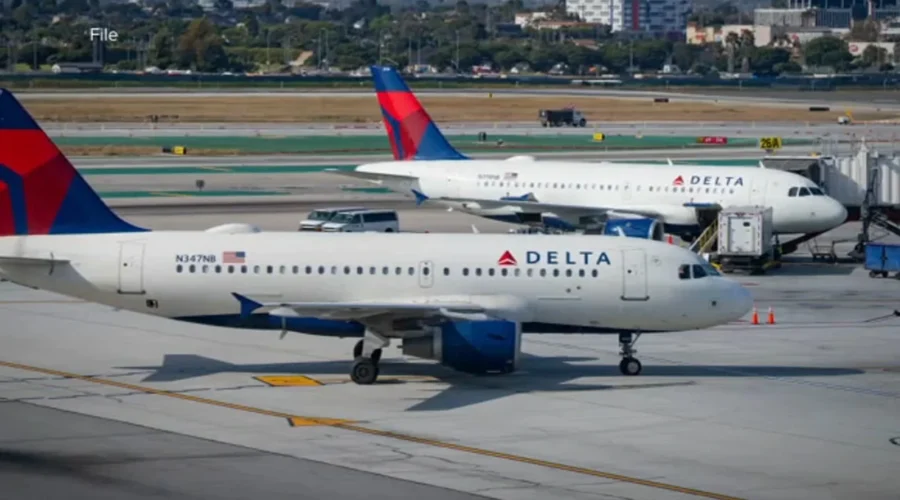
Introduction: Overview of Delta Flight DL275 Diversion
Delta Flight DL275 became a widely discussed aviation incident when it was unexpectedly diverted to Los Angeles International Airport (LAX) during its long-haul journey. The flight, operated by Delta Air Lines, was originally scheduled to complete a transpacific route, but mid-air complications forced the crew to change plans for safety reasons. This type of diversion attracts attention because international overwater flights are carefully monitored and rarely altered unless a serious issue appears.
The diversion to LAX was not an accident or crash situation, but a precautionary safety decision made by the flight crew. Modern aviation prioritizes passenger safety above all else, even if it disrupts the schedule. This incident shows how airlines respond quickly to technical alerts and ensure aircraft land at suitable airports equipped for inspection and maintenance.
Flight Background and Route Details
Delta Flight DL275 operates as a long-haul international service connecting major global hubs. These flights are typically operated using wide-body aircraft designed for long distances, fuel efficiency, and passenger comfort. Because of extended overwater segments, such routes require strict safety systems and constant monitoring.
Before the diversion, the aircraft was following a standard transpacific route. These routes always include alternate airports in case of emergencies or technical issues. This planning is essential because over-ocean flights have limited immediate landing options, making safety preparation extremely important.
Timeline of Events: From Departure to Diversion
The flight departed normally with no early signs of problems. However, during the journey, onboard systems detected a technical irregularity related to a critical aircraft system. The crew monitored the situation closely while communicating with air traffic control to assess risk levels.
After evaluation, the pilots decided to divert the aircraft toward Los Angeles International Airport. The route was adjusted, passengers were informed, and ground coordination was established. The aircraft then landed safely at LAX without any injuries or emergency escalation.
Reason Behind the Diversion
The diversion was mainly caused by a technical issue involving the engine anti-ice system or a related alert. This system is important because it prevents ice formation during high-altitude flights, especially over cold oceanic regions. Even minor faults are taken seriously in aviation due to safety requirements.
Pilots are trained to avoid continuing over remote areas when such alerts appear. Instead, they divert to the nearest suitable airport with full maintenance support. LAX was chosen because of its capability, location, and technical support facilities for large international aircraft.
Role of Los Angeles International Airport (LAX) in the Diversion
Los Angeles International Airport is one of the most important aviation hubs in the United States. It is fully equipped to handle large international aircraft and has advanced maintenance and engineering services available. This makes it a key diversion airport for long-haul flights crossing the Pacific.
In the case of DL275, LAX provided safe landing conditions and immediate technical support. The airport also handled passenger logistics, including rebooking and assistance. Its location and infrastructure make it a reliable choice for unexpected diversions.
Passenger Experience and Onboard Response
Passengers were informed calmly by the cabin crew about the technical issue and diversion. Airline staff are trained to handle such situations professionally to avoid panic. Although unexpected, most passengers experienced delays rather than an emergency situation.
After landing, passengers were assisted with rebooking and travel arrangements. Delta Air Lines typically provides support such as alternative flights and customer service assistance in such cases. Safety remained the top priority throughout the event.
Aircraft Inspection and Technical Assessment
After landing at LAX, engineers began a detailed inspection of the aircraft. This includes checking engine systems, reviewing onboard data, and testing components related to the reported alert. These procedures ensure that any potential issue is fully understood before the aircraft returns to service.
The aircraft remains grounded until all safety checks are completed. Depending on findings, maintenance or part replacement may be required. Aviation regulations require full clearance before resuming operations.
Aviation Safety Perspective
Flight diversions like DL275 are standard in aviation safety procedures. Modern aircraft are equipped with advanced monitoring systems that detect issues early. When a warning appears, pilots are trained to take immediate action rather than risk continuing over remote areas.
Aviation authorities enforce strict safety rules to ensure passenger protection. This makes diversions a sign of effective safety systems rather than failure. Airlines prioritize safety over punctuality in every situation.
Conclusion
The diversion of Delta Flight DL275 to LAX was a precautionary safety measure triggered by a technical system alert. Although it caused disruption, it demonstrated the effectiveness of aviation safety protocols and pilot decision-making.
The safe landing, passenger handling, and technical response show that the aviation system worked as intended. Such incidents reinforce the importance of strict safety standards in modern air travel.
FAQs
1. Why was Delta Flight DL275 diverted to LAX?
Because of a technical system alert requiring precautionary landing.
2. Was it an emergency landing?
No, it was a safety diversion, not an emergency.
3. Were passengers safe?
Yes, all passengers landed safely without injury.
4. Why was LAX chosen?
Because of its strong maintenance facilities and strategic location.
5. Are flight diversions common?
Yes, they are a normal part of aviation safety procedures.
6. What happens after diversion?
The aircraft is inspected and passengers are rebooked or assisted.